I just watched the last episode of “The Deuce,” on MAX, a totally underrated show if there ever was one, perhaps because of the sordid subject matter. In the final scene Vince, played by James Franco who is in New York for a wedding, having left town sometime in the past, walks along 42nd street, “The Deuce,” for the first time in a long time.
As he walks through the brightly lit streets of today’s tourist central, he encounters the ghosts of all of the people who died on the show as a woman with a smokey voice sings “The Sidewalks of New York” in a halting, dirge-like way. It made me cry, evoking all of the people in my life I’ve lost to death, some through just plain life. I looked up the singer- the voice was eerily familiar, and it turns out its Debbie Harry. “Blondie” is credited on the soundtrack.
I never really listened to the lyrics of that song, but the way Debbie sings it, slowly and sadly made it the quintessence of what New York means to New Yorkers, and our relationship to the streets we inhabit and walk on daily.

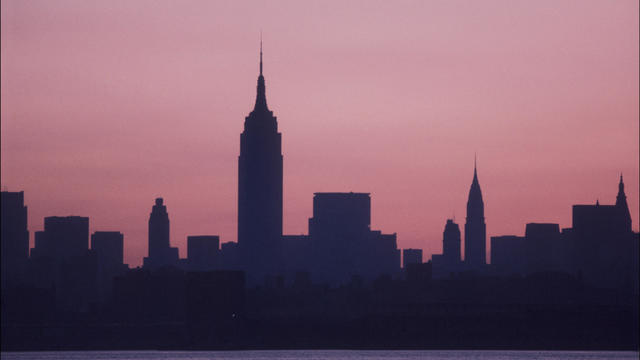
To make it doubly poignant, today is the 47th anniversary of the blackout of 1977. It was something I watched happen. I was standing on the corner of Washington and Lafayette avenues in Brooklyn on a payphone, actually looking at the Manhattan skyline just beyond the Brooklyn Navy Yard some blocks to the west. It was just getting dark and the Empire State building was lit.
I was calling my girlfriend at the time Anna, who worked at the Beekman Theater on 57th Street to tell her I was on my way to pick her up. Anna later turned out to be one of those life losses a few years later.
I got the theater manager on the line, who said, “Can’t talk now, the lights are going out,” before the line went dead. That prompted me to look at the Manhattan skyline, and watched as the lights in the Empire state building went out floor by floor, then the rest of Manhattan, then the streetlights in Brooklyn go out block by block until the corner I was standing on went dark.
Almost immediately there was screaming and people running up and down the street, total bedlam.
I made my way down the block to a friend’s building, a brownstone on the corner of Willoughby Avenue. He was a Haitian immigrant named Eddie, and there were already a couple of other friends there. Eddie had cold beer, and another friend Tony had weed, and we sat on Eddie’s stoop with a couple of baseball bats for protection and watched the world go mad around us.
Someone brought down a transistor radio and we heard the reports of looting and burning and could hear all the trouble over on Myrtle Avenue a long clock away.
Eventually we ran out of beer, weed, and interest and I walked down to my apartment in the middle of the block armed with a spare candle Eddie had given me. I had to walk up the four flights of stairs since the elevator was out. Having no TV to watch I fell right asleep, only to be woken around 2AM when Anna had finally made it home.
“How’d you get to Brooklyn?” I asked her.
“The manager gave us all cab fare and I finally caught a cab willing to come over the Bridge.”
I was glad she was ok.


 xaviertrevino