The Red Caboose is a self-proclaimed “hobby shop” in the basement of a commercial building at 23 West 45th Street, in the heart of the diamond district. Damn, I should be writing for real estate brokers! Their website proclaims that while they “still do have trains in a variety of scales,” they are also “strong in die cast planes, cars, and have a vast supply of hobby supplies: paint, tools, glues, etc.” The Red Caboose is a dying breed. They should actually call themselves “The Last Hobby shop in Manhattan.”
There used to be dozens, and by the time I was frequenting them, in the 90’s there were still some left- Jan’s Hobby shop on the Upper East Side, a place I think they called The Model Center in the Empire State building, and my favorite, Ace Hobbies on 32nd Street just off of 6th Avenue.
Ace was a hole in the wall shop, literally just a bare loft space in Little Korea with stacks of military styrene model kits on sheet metal shelving. Planes, tanks, ships. Some racing cars for the car aficionados.
That was after the gulf war and it sparked interest in all things military, at least in me; and gave new hope to the fellow Lew who owned the place. And to the plastic model industry, of course.
Lew was a chain-smoking bald man in his late 40s who wore a wispy mustache and was prone to fraying white shirts and skinny ties. He looked like he could play a washed-up Madison Avenue Ad executive in some Jaqueline Susann movie. Well, a movie based on a Jaqueline Susann book, I should say.

One of the reasons it was my favorite was that Lew chain-smoked cigarettes, and so did I at the time. That and he also had a rack of the latest modeling magazines, plus Aviation week and Military Aircraft Journal. Nobody else had those things. He was also amenable to ordering a particular kit for you if it wasn’t in stock.
I would go to Ace Hobbies several times a week and spent a lot of time and money there with other model freaks. By doing so I ended up with a collection of over 500 plastic model kits. I probably built 50 or 60 of them until I got divorced and had to get rid of most of them.
I was really into the model building though- I strove to build “museum quality” models and came very close. I read “how to” magazines and bought the right tools and honed my skills.
That’s how I came to visit the Red Caboose sometime in the late 90s.
The Red Caboose had the best diorama supplies in the city. People that do model railroading are serious about their dioramas. They were the only ones that carried miniature colored and clear lights and lenses, essential even for airplanes if you want something to look authentic.
After finding out about them I made the trip to 45th Street in search of tiny glass lights. The place is in the basement of a four-story building, almost lost under “we buy gold” signs that overflow West 45th Street.
They had their own characters, some even wearing the de rigueur pinstriped railroad engineer caps. They had their own Lew- a tall thin African American fellow with granny spectacles dressed in chambray and denim that everyone called “The Professor.” But there was no smoking here.
I was fascinated. The dusty little shop was a warren of die-cast passenger airliners and cars. A good amount of plastic car kits. And of course, tons of HO scale trains.
I found my little lights, along with miniature chains and lichen. Bottled rust and oil stains. I was in heaven.
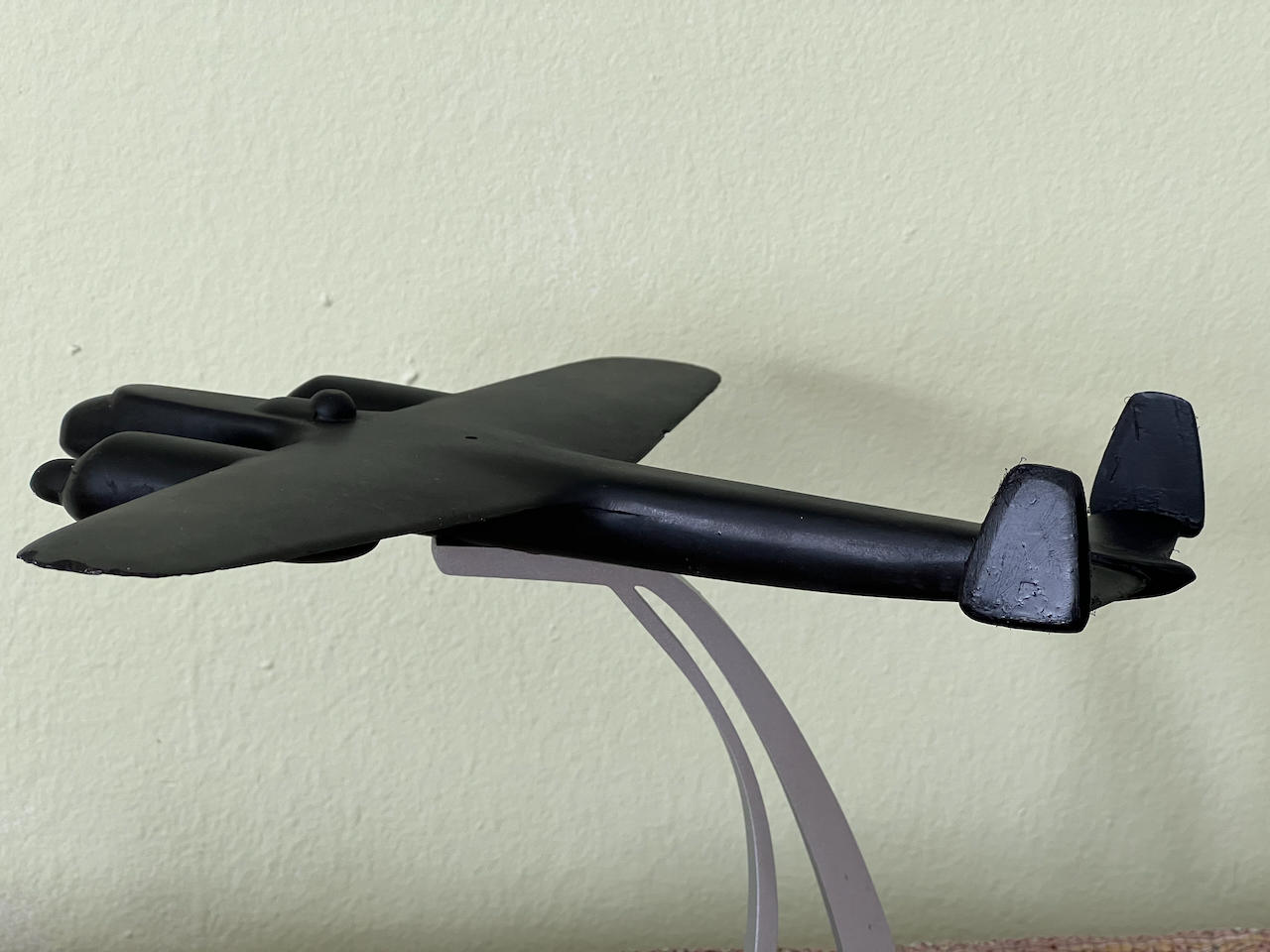
Of course, all of that went by the wayside when I got divorced and there were more important things to do besides building little airplanes. But somewhere along the line, I found an old Bakelite aircraft recognition model of a German bomber from WWII. A great find except the two tailplanes were broken off. But it’s tough for me to throw away anything that rare, much less an airplane, so I’ve toted it around from one apartment to another for the past 25 years.
Last year in the spur of the moment I hung it above our bed, flat against the wall. Danusia objected.
“Why don’t you like it?” I asked. “It looks like a cross.” She answered. It was getting a little Freudian for the both of us, I thought.
I took it down when we painted a couple of months ago, and I thought, “how do I get this to look less like a cross?” Why, fix the tailplanes, of course!
So here was the conundrum: The model itself is made of Bakelite, an outdated plastic they used to make telephones from in the 1940s. Some of us are familiar with the hard black substance.
The material I needed to make new tailplanes would have to be polystyrene card, and the only thing that will join the two is cyanoacrylate glue. Superglue, to the uninformed. This is work, as the dried glue is harder than either the Bakelite or the polyurethane. I would need all my skills to make blend in three disparate materials.
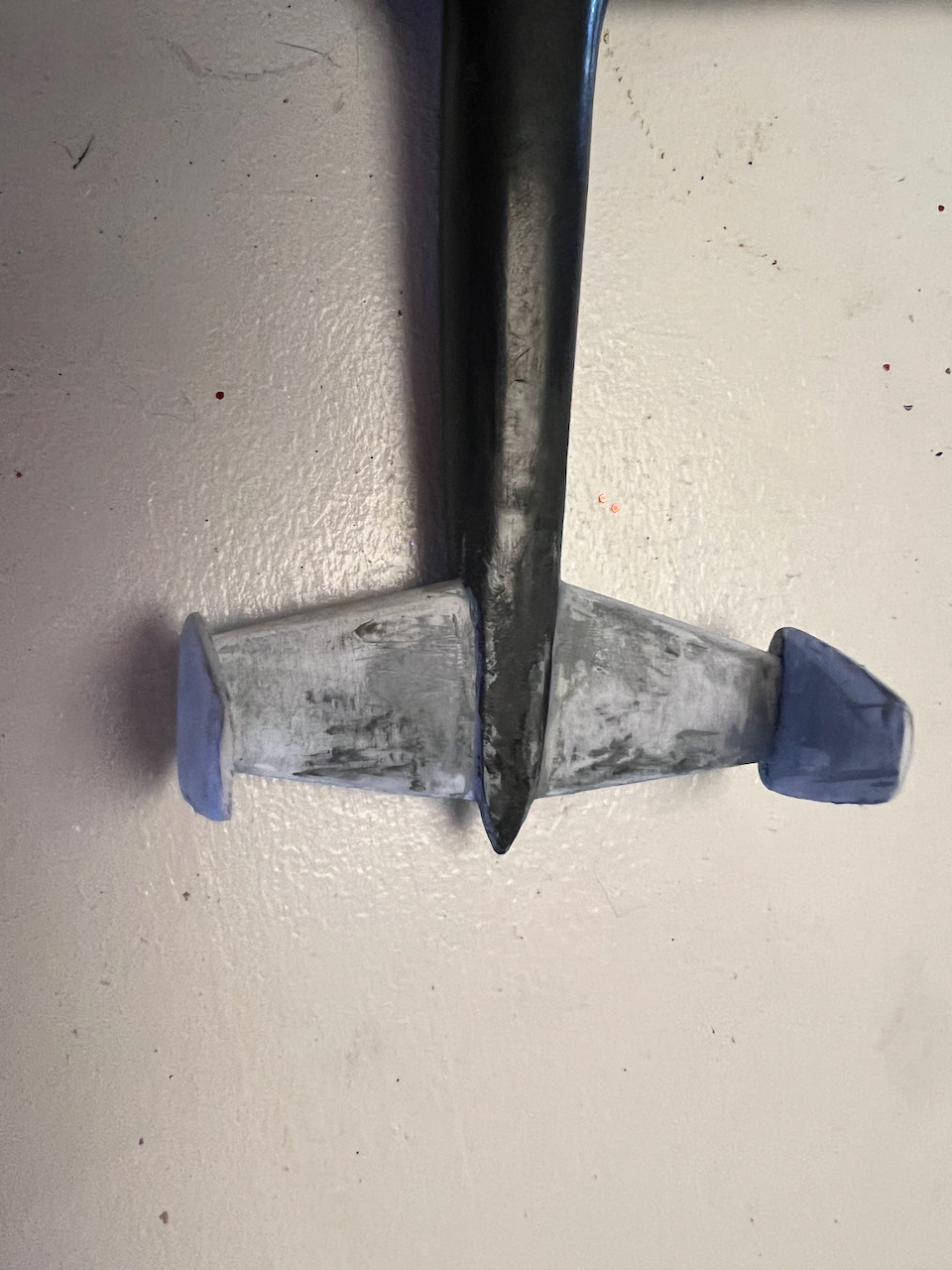
The second part of the conundrum was making an accurate representation of the twin vertical stabilizers. Just my luck there were two verticals and two horizontals, a twin-tailed plane.
I managed to track down some 1/72nd scale plans for the Do-17 online, made some sketches, and went to work with my trusty miniature saws and Dremel.
I did all this right after Christmas, which brings me to the kindness part of the story.
Right after the holiday we were invited to one of Danusia’s friends’ home up in Greenwich. She is a single mom with an 11-year-old boy.
“Do you think there is some activity you can do with Wes?” Danusia asked. “He can use an adult males’ attention…”
I thought about it, and about the 20 or so unbuilt model kits in my closet.
“Does he like to build things?” I asked.
“Oh, yes. He likes Legos and things like that.”
“How about I bring an airplane we can build together?”
“But all you have are warplanes. His mother wouldn’t appreciate that.”
“I think I can find something unwarlike.” I said.
I looked through my stash and found an old 1/72nd scale FROG kit of the Grumman “Goose.”
The Goose was a seaplane designed before the war as an 8-passenger commuter plane specifically for the wealthy Long Island crowd. Fly to New York Harbor and skip the LIRR! They must have proclaimed. The kit I had was of course of a plane pressed into service by the RAF during the war, but there was no need to paint it or put the decals on so it could just be the passenger goose. Wes and I had a blast putting the goose together and it inspired me to get off my ass and fix the Dornier with the broken tail.
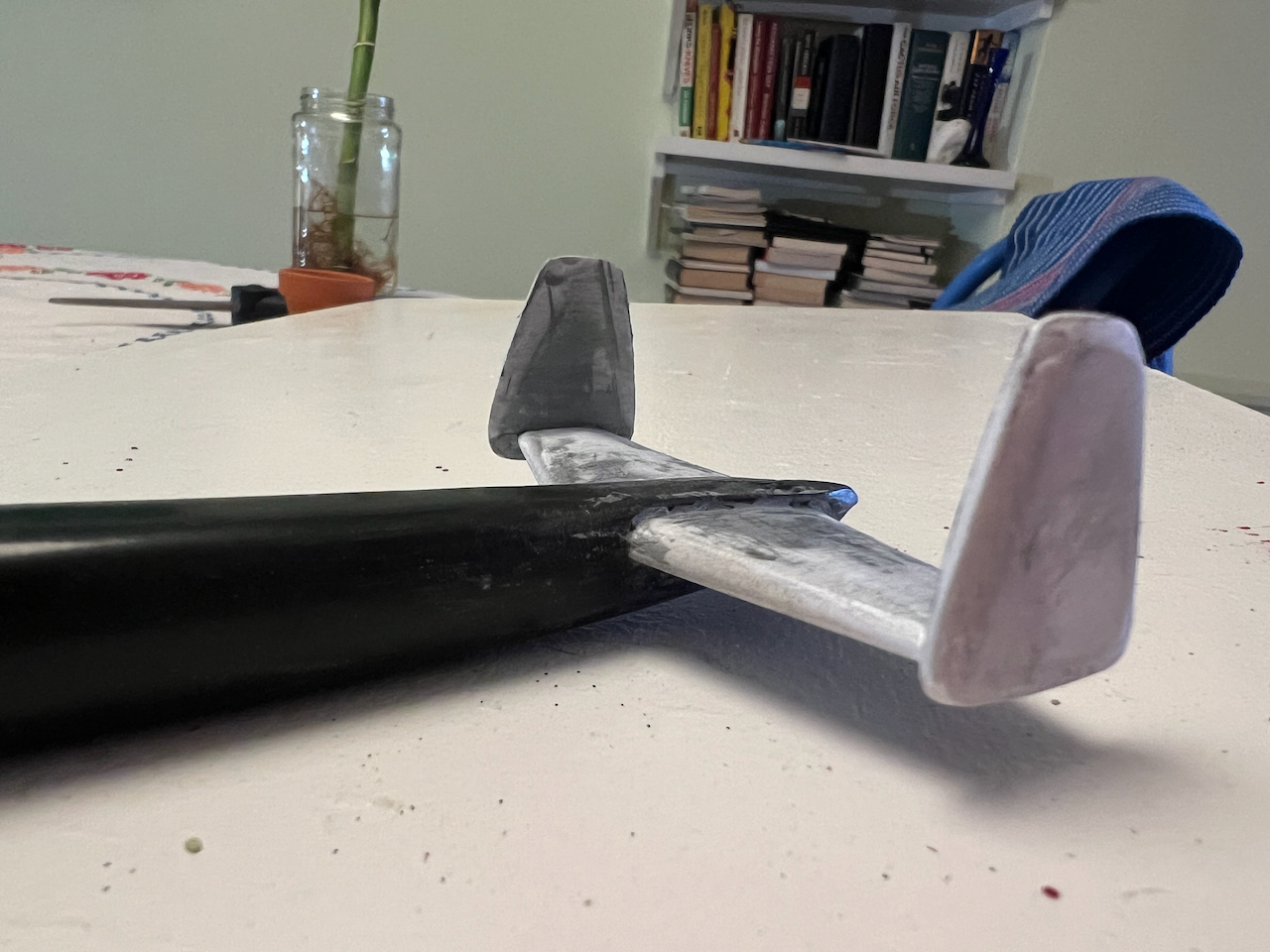
As you can see by the pictures, I was successful. I want to tackle more of the kits in my stash, but I need more polystyrene glue. I left the bottle I had with Wes in case he feels like budling more kits. The bottle I gave him I bought at Blick art supplies, where I got the sheet plastic. But it comes with a little brush and is not as good as the professional glue dispensers from Testor’s, which is what I always used. But I know they have them at the Red Caboose.


 xaviertrevino